What Amazon Sellers Need to Prepare for Q4
What Amazon Sellers Need to Prepare for Q4
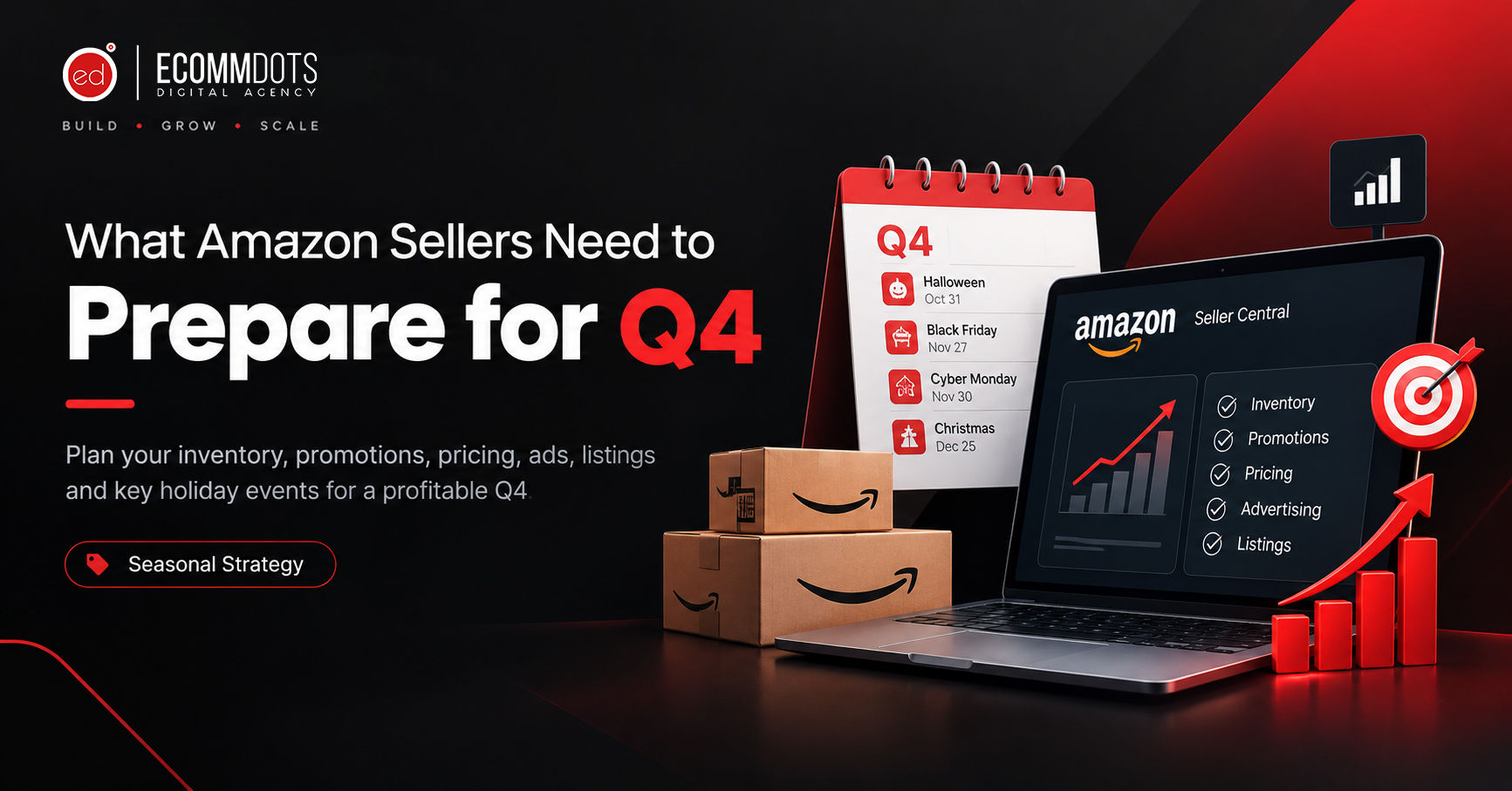
The fourth quarter can make or break an Amazon seller’s year. Shoppers spend more, competitors spend more, and Amazon’s fees and deadlines get tighter. Sellers who prepare early get the sales. Sellers who prepare late run out of stock, burn their ad budgets, or win sales that lose money. This guide covers what to prepare, area by area: inventory levels, promotions and deals, pricing, advertising, listings, the Black Friday and Cyber Monday plan, and the smaller moments of Halloween, Christmas, and New Year.
The Q4 Calendar at a Glance
Halloween is on 31 October. Black Friday is on 27 November and Cyber Monday on 30 November, although Amazon’s own sale events often start earlier and run longer. Christmas follows on 25 December, then New Year. Alongside these dates, Amazon charges higher fulfillment fees during the holiday peak. Reports of Amazon’s 2026 calendar put that window at 15 October 2026 to 14 January 2027, averaging about 32 cents more per unit, plus a fuel and logistics surcharge introduced in April 2026. These details are for the US marketplace, so check Seller Central if you sell elsewhere.
1. Inventory Levels
Inventory is the first thing to get right, because no ad, deal, or listing can sell stock you do not have.
Forecast the spike. Look at last year’s Q4 sales for each top SKU, add your growth since then, and plan for a real peak around Black Friday, Cyber Monday, and the weeks before Christmas. Then compare that with your days of supply. If a bestseller has less than a few weeks of cover, it needs attention now.
Know the arrival deadlines. Amazon sets dates by which stock must arrive at its facilities to be ready for each event. Reports of the US calendar give 21 October for FBA with minimal splits and 28 October for Amazon optimized splits for Black Friday week and Cyber Monday. These are arrival dates, not shipping dates, so you need to ship well before them. Minimal splits carry the earlier deadline.
Check capacity and fees. Amazon sets monthly storage capacity limits, so you may not be able to send everything you want. It can also charge a low inventory level fee if your stock cover falls too low, and surcharges on stock that has sat for months. Sending too much costs you in storage, and sending too little costs you in lost sales.
Build a backup. If you miss a deadline, or a shipment is delayed, you can fulfill part of your stock yourself so the product stays available. That adds work and delivery risk, so decide in advance which SKUs it makes sense for.
2. Promotions and Deals
Amazon offers deal types such as Best Deals, Lightning Deals, and Prime Exclusive Price Discounts. Reports of the 2026 fee structure put the cost at about $100 upfront per promotion plus 1.5 percent of promotional sales, with an earlier submission discount. Reports also say the window to submit Black Friday week and Cyber Monday deals closes on 20 October. If you have missed it, you still have coupons, price changes, and well timed advertising, which need no approval.
Whatever you run, check three things first. Does the product have enough stock to last the whole event? Does it still make a profit after the discount, the peak fees, and the deal fees? And is the discount deep enough to matter without giving away your margin? A promotion that sells a lot and loses money on every unit is not a success.
3. Pricing and Profit Margins
Higher peak fees mean your usual margins shrink in Q4. Recalculate your profit per unit for every SKU using the peak fees, not the normal ones. Set a minimum price for each product, so that neither a promotion nor an automated repricer can push you below break even. Watch competitors too. During Black Friday week, prices move quickly, and you do not have to match every cut. Match where it protects your Buy Box and your ranking, and hold your price where it does not.
4. Advertising Budgets and Campaigns
Competition for clicks rises as the events approach, and campaigns that were efficient in September can behave differently in November. Start your preparation weeks ahead, because campaigns need time to collect data.
Budgets. Raise them in steps before the peak, so they last through the evening instead of running out at lunch. Set alerts for campaigns that use their budget too early.
Campaign mix. Review your branded, non-branded, product targeting, and retargeting campaigns. Keep branded campaigns well funded, since shoppers who search your name are your easiest sales. Use Sponsored Brands and Sponsored Display to reach shoppers who looked at your product and did not buy.
Measure profit, not just sales. Track ACoS, TACoS, and profit per order. Test a few scenarios, such as higher click costs, more returns, and an early stockout, before you commit your budget. Our advertising guides cover how to structure this.
5. Listings and Creative
Treat your listings as ready to sell by early November. Check titles, bullet points, images, and A+ content for your top products, and fix anything unclear. Freeze major changes a couple of weeks before Black Friday, so you are not testing new content on your biggest days. If you use variations, check that every child is attached and in stock, because a broken family loses sales at the worst time. For gift season, add images and copy that speak to the gift buyer: what is in the box, who it suits, and how it is sized.
6. Black Friday and Cyber Monday Plan
On the days themselves, the work is monitoring. Check stock levels, ad spend, and conversion several times a day, and make only urgent fixes. Keep an eye on any promotion that is selling faster than expected, since stock can run out within hours. Assign one person to inventory, one to ads, and one to listings and account alerts, so problems are caught quickly. After Cyber Monday, keep watching, because ad sales are often credited later and demand stays strong into December.
7. Halloween, Christmas, and New Year
Halloween. If you sell seasonal products and have not already sent stock to Amazon, FBA is out of reach for this year. Sell through what you hold and keep ads on. Decide what to do with unsold stock after 31 October, whether to discount, bundle, remove, or hold it, and compare each against the cost of storing it.
Christmas. Gift buyers search by recipient and occasion, and they care about delivery dates. Check Amazon’s delivery cutoffs in Seller Central, because your last reliable order date depends on how you fulfill. Sellers who ship their own orders carry the most risk, since a late parcel in December means a refund and a bad review. Keep buffers on gift bestsellers, and expect ad costs to stay high into mid December.
New Year. This is when Q4 shows its real shape. Look at aged and slow inventory, recheck your margins when the peak fees end, and place your next restock early. Chinese New Year falls in early February 2027, and many factories close for weeks around it.
8. Customer Service, Returns, and Cash Flow
Higher sales bring more messages, more returns, and more chances for negative feedback. Check your response times and your account health before the rush, because a problem during peak season is harder to fix. Amazon has extended its holiday return window in past seasons, and last year items bought from 1 November to 31 December could be returned until the end of January. Check whether the same applies this year. The effect on you is that a November sale is not final money until the return window closes. Hold back an estimate for returns before you treat Q4 profit as spendable, and keep enough cash for refunds and for restocking in January.
Your Q4 Preparation Checklist
1. Forecast peak demand for each top SKU and compare it with your current days of supply.
2. Confirm which inbound arrival dates you can still meet, and plan a backup for the rest.
3. Check storage capacity and avoid sending slow movers.
4. Choose your promotions, and work out the break even price for each one.
5. Recalculate profit per unit with the peak fees, and set a minimum price on every SKU.
6. Raise ad budgets in steps, set early budget alerts, and fund branded campaigns first.
7. Review titles, images, A+ content, and variations on your top products, then freeze changes.
8. Make a plan for Halloween leftovers, Christmas delivery cutoffs, and January restocking.
9. Check account health, response times, and customer service coverage.
10. Set aside a returns estimate and a January cash reserve.
A good Q4 is not about the biggest discounts. It is about having stock when shoppers want it, spending ad money where it pays back, and knowing what is left after fees and returns. Work through each area before the rush, and you will go into January with profit, not just revenue.
Want a second pair of eyes on your Q4 plan? Talk to the Ecommdots team and we will review your inventory, ads, and listings before the rush.