Vendor Central vs. Seller Central: Which One Are You Actually On?
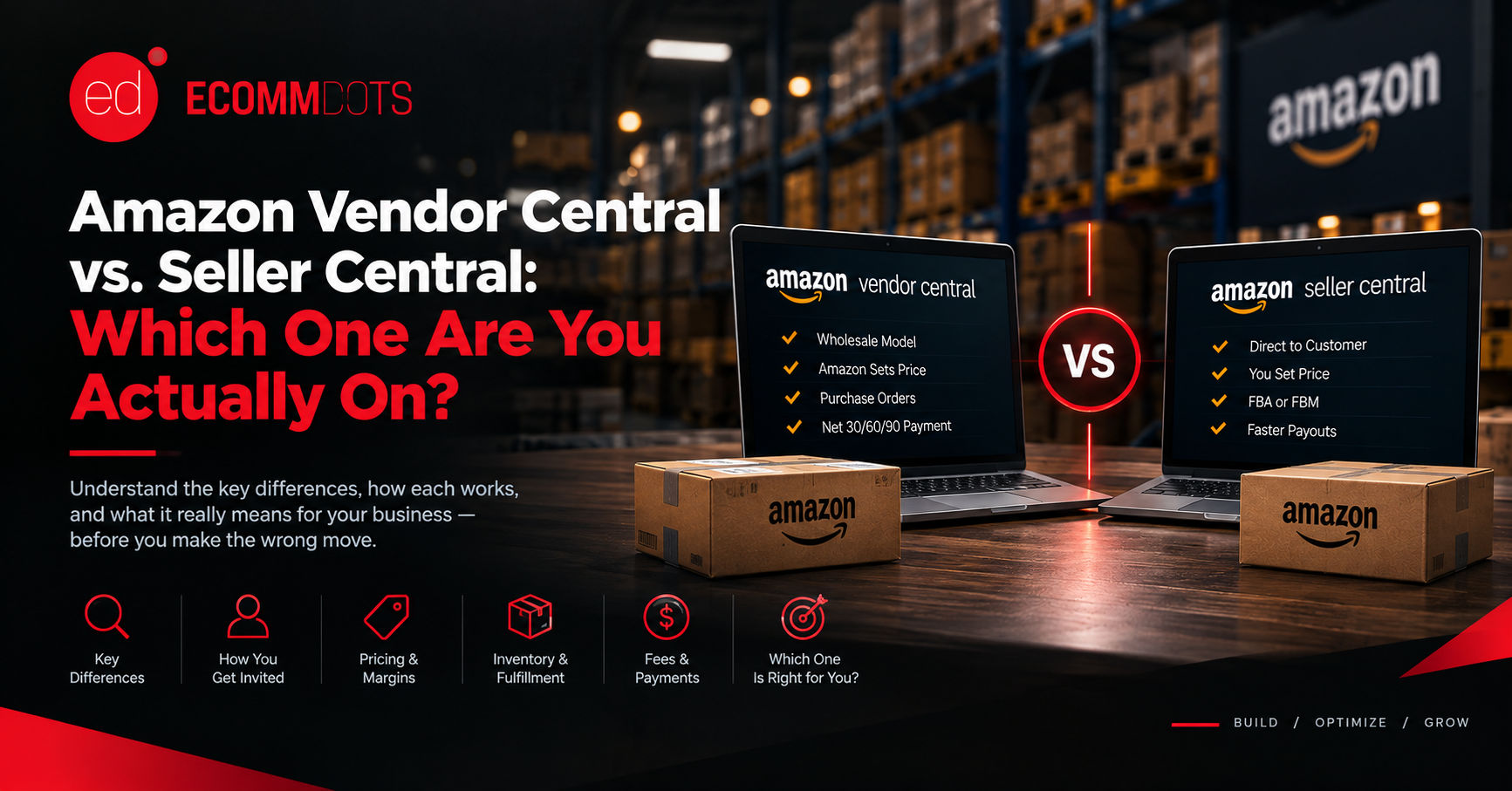
Vendor Central vs. Seller Central: Which One Are You Actually On?
Most of what gets written about selling on Amazon assumes you are on Seller Central, listing and selling your own products directly to customers. Vendor Central is a different system entirely, and confusing the two leads to real mistakes, since the tools, the fees, and even who sets the retail price work differently on each.
What Amazon Vendor Central Is
Vendor Central is Amazon's platform for first-party sellers, meaning you sell your products wholesale to Amazon, and Amazon becomes the retailer of record. You send inventory in response to Amazon's purchase orders, Amazon pays you a wholesale price, and Amazon decides the retail price the customer sees, handles the customer relationship, and takes on the fulfillment and support that comes with being the seller. This is different from Seller Central, where you remain the seller yourself and sell directly to the customer, whether you fulfill orders through FBA or handle them yourself.
How Sellers End Up on Vendor Central
Vendor Central is invitation-only. Amazon reaches out to brands it wants to buy from directly, usually ones with an established sales history, strong demand, or a product line Amazon wants to stock as first-party inventory. You cannot sign up for it the way you can register a Seller Central account, and receiving an invitation does not obligate you to accept it. Some brands decline and stay on Seller Central, and some run both, selling certain products wholesale through Vendor Central while keeping others on Seller Central.
The Practical Differences
Amazon sets the retail price on Vendor Central, and it can change independent of what you charge other retailers, which sometimes creates conflicts with your other sales channels. You are paid a wholesale price per unit rather than keeping the full retail margin minus fees. Amazon issues purchase orders based on its own demand forecasting, so you do not control how much inventory Amazon buys or when. Payment terms are typically net 30, 60, or 90 days, which is slower than the roughly two-week payout cycle on Seller Central. In exchange, being sold as first-party inventory can carry a credibility signal with some shoppers, and you are not the one running day-to-day fulfillment and customer service on those units.
Why Sellers Still Ask About Vendor Central Management
Vendor Central has its own set of tools, and terms like vendor central portal and vendor central account come up because the interface, the purchase order process, and the chargeback system are genuinely different from Seller Central and take time to learn. Amazon can issue chargebacks for packaging or shipping errors on inbound shipments, and those deductions catch new vendors off guard if nobody is actively managing the account. This is also why a specific category of vendor central management services exists: brands that got an invitation and accepted it, then found the day-to-day operations more demanding than expected.
Which One Should You Actually Be On
If you were never invited to Vendor Central, this is not a decision you are making right now. Seller Central is open to any registered seller and gives you control over pricing, inventory levels, and how you fulfill orders, and it is the right starting point for the large majority of sellers. If you do receive a Vendor Central invitation, weigh whether the wholesale margin and slower payment terms are worth giving up pricing control, against the potential upside of Amazon buying in bulk and taking over fulfillment for those units. There is no universally correct answer. It depends on your margins, your cash flow, and how much control over pricing matters to your business.
The Bottom Line
Vendor Central and Seller Central solve different problems for different sellers. Seller Central keeps you in control and is where almost everyone starts. Vendor Central trades some of that control for Amazon buying wholesale and acting as the retailer, and it only becomes relevant if Amazon actually invites you. Knowing which one you are on, or might be offered, changes how you think about pricing, cash flow, and who is actually setting the price your customer sees.
Weighing a Vendor Central invitation, or trying to manage one that already feels harder than expected? Talk to the Ecommdots team and we will help you work out whether it makes sense for your brand.