Amazon Digital Marketing: What It Actually Covers Beyond PPC
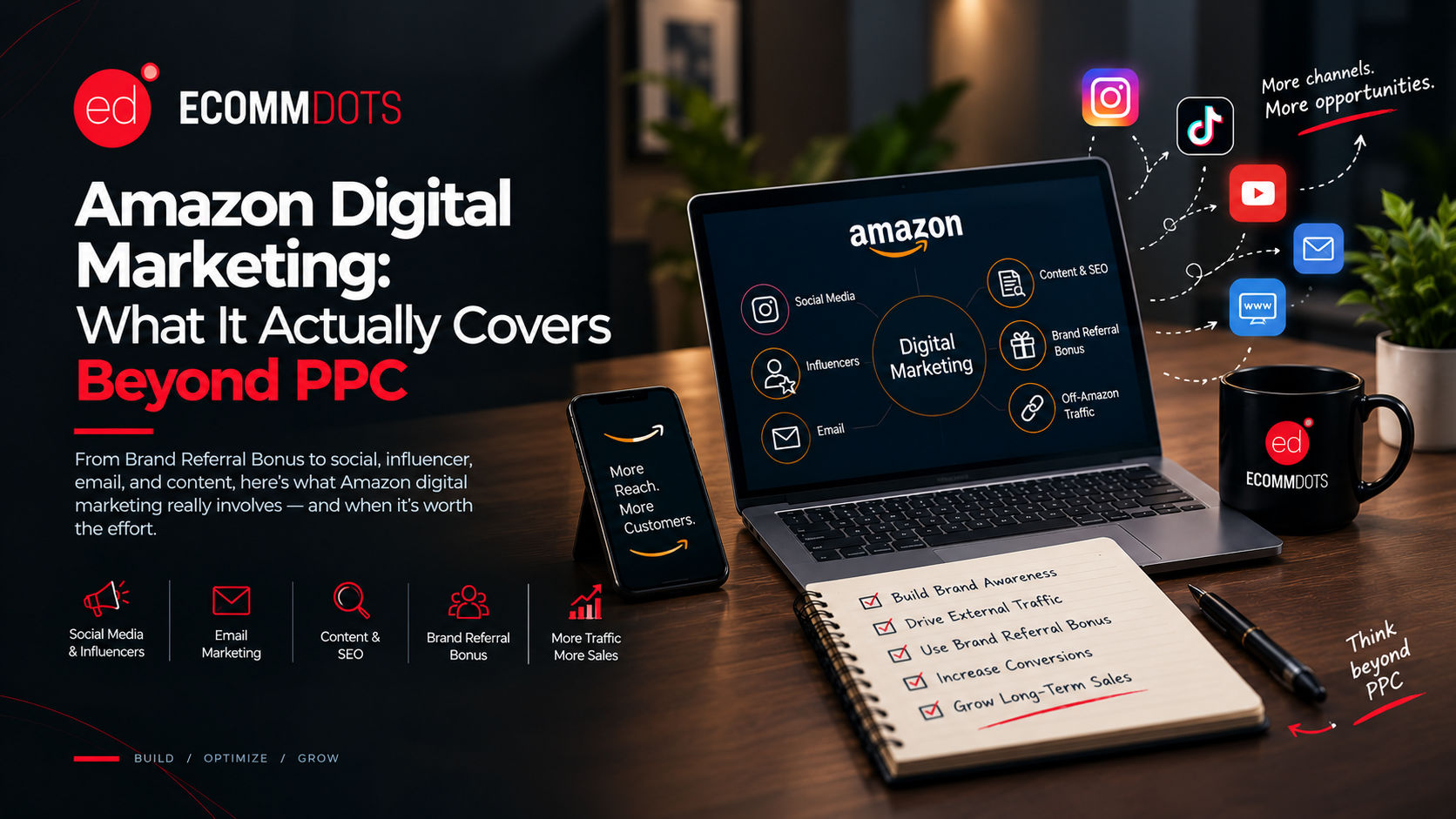
Amazon Digital Marketing: What It Actually Covers Beyond PPC
Amazon digital marketing gets used as a catch-all term, and most people searching it already run Sponsored Products and still feel like something is missing. What is usually missing is everything that happens outside Amazon's own search results: the traffic you bring in yourself rather than the traffic Amazon's ad auction sells you.
Where This Sits Relative to PPC
Sponsored Products, Sponsored Brands, and Sponsored Display, covered in our PPC guides, are demand capture. They show up when someone is already searching on Amazon. Digital marketing in the sense this post means is demand generation and external traffic: getting people who are not currently searching Amazon to land on your listing or Storefront anyway, through channels Amazon does not control the auction for. Both matter, and they work together rather than replacing each other.
The Brand Referral Bonus: Why External Traffic Pays Differently Now
Amazon's Brand Referral Bonus program is the part of this that changed the economics. When you send traffic from outside Amazon, such as from your own website, social media, or an email campaign, to a listing or Storefront and it results in a sale, Amazon credits back a share of the referral fee for that sale, for Brand Registry–enrolled sellers. This means external traffic is not just free marketing exposure, it can directly lower your effective Amazon fees on those sales, which changes the return on effort spent driving traffic from outside the platform.
Social Media and Influencer Traffic
Social platforms and influencer partnerships can send warm traffic to a Storefront or listing, and this is where a built-out Storefront, covered in our Storefront setup guide, actually earns its keep: it gives that traffic somewhere better to land than a single product page. Amazon's own Influencer Program lets approved creators build their own shoppable storefronts and earn commission, which is a lower-effort way to start than negotiating individual sponsorship deals. Whichever route you use, track it through unique links where possible so you can tell which creator or platform is actually converting, rather than guessing from a bump in overall sales.
Email and Owned Audiences
Any email list or customer base you already own, whether from your own website, past customers, or a loyalty program, is a direct line to repeat buyers that does not depend on Amazon's algorithm or ad auction at all. Driving that audience toward a Storefront, a new product launch, or a specific collection page tends to convert well, since it is reaching people who already know the brand. This channel is also the one most sellers already have and most underuse, since it requires no new ad spend, only consistency.
Off-Amazon SEO and Content
A brand's own website, blog content, or YouTube presence can rank in Google and other search engines for terms Amazon itself does not own, and that traffic can be pointed at an Amazon listing or, increasingly, at your own site if you also sell direct. This works on a much slower timeline than Sponsored ads, often months rather than days, but it builds an asset that keeps bringing traffic without ongoing spend, unlike a paused ad campaign that stops sending clicks immediately.
How to Actually Prioritize These Channels
1. Confirm Brand Registry is active, since the Brand Referral Bonus and several of these channels assume it.
2. Build or finish your Storefront first, since every other channel here sends traffic somewhere, and a flat product page converts worse than a built-out Storefront.
3. Start with the owned audience you already have, email or an existing customer base, since it requires no new relationship-building to activate.
4. Add one external channel at a time, social, influencer, or content, rather than spreading thin effort across all of them at once.
5. Use trackable links wherever the channel allows it, so you can tell which source is actually converting and claim Brand Referral Bonus credit correctly.
6. Treat this as a slower-building complement to Sponsored ads, not a replacement for them, since the two serve different parts of a customer's buying journey.
The Bottom Line
Amazon digital marketing beyond PPC is mostly about traffic Amazon does not sell you in an auction: social, influencer, email, and your own content, landing on a Storefront built to convert it. The Brand Referral Bonus gives this real financial weight now, not just brand-building value. None of it replaces Sponsored ads, but for Brand Registry–enrolled sellers with an audience to reach, it is money left on the table if it stays untouched.
Want help setting up external traffic tracking or claiming the Brand Referral Bonus correctly? Talk to the Ecommdots team and we will set it up properly.